Cotten Law Firm, PLLC charges reasonable, small firm fees to aggressively defend your North Carolina criminal case with results-driven, big firm strategies.


Proven Results
Over 5,000 5-star reviews on Google
-
“He handled my speeding ticket quickly and professionally, and the outcome was far better than I expected. He was able to reduce my charge and ensured that no insurance points were assessed, which gave me tremendous peace of mind.- Bahareh S.
” -
“The entire process was simple, quick, and thorough, any questions I asked were quickly answered. They handled everything, I didn't even have to go to court.”- Alaura C.
-
“The process was smooth, and the communication was clear and professional, explaining the outcome and payment steps thoroughly. I highly recommend Jeremy Cotten for his low-cost, high-value service. I couldn't be happier with the result!”- Kay H.
-
“Their staff is professional, meticulous, and consistently responsive-a refreshing difference compared to many other law offices.”- Yoni G.
-
“All I had to do was let Mr. Jeremy work his magic and when I say he GETS IT DONE, trust me… HE GETS IT DONE! THE BEST”- Former Client
-
“If you need a legal team that is knowledgeable, trustworthy, and results driven, I highly recommend Cotten Law. I’ll definitely be spreading the word to family and friends. Thank you again for your outstanding service!”- Emmanuel U.
Out Of State DWI: How Your North Carolina License Could Be Affected
North Carolina residents who are convicted for driving under the influence (DUI) or driving while intoxicated (DWI) in another state might be surprised to learn that not only will they face consequences in the state of their conviction, but they may face consequences in North Carolina, too.
Here, we discuss the implications of an out-of-state DWI on your North Carolina driving privileges, as well as how an experienced North Carolina criminal defense attorney can assist with getting those privileges restored.
The “Drivers License Compact”
Forty-six states, including North Carolina, are a part of the “Drivers License Compact,” which is an agreement among the states that requires states to report certain convictions, such as DWIs, to the state licensing authority of the home state of the impaired driver.
For example, if a resident of North Carolina is convicted of a DWI in South Carolina, he or she would be charged under the laws of South Carolina and, if convicted, would serve the penalty imposed by South Carolina. In addition, South Carolina would report this conviction to the North Carolina DMV.
The North Carolina DMV Will Take Action
Once the North Carolina DMV receives notice of a person’s DWI conviction in another state, the DMV will revoke the person’s driver’s license for one year. That is because, under North Carolina G.S. 20-4.24(b), North Carolina must act as though the conviction of a DWI in another state had occurred in North Carolina and treat it with the same consequences.
Eligibility For Limited Driving Privileges
Once a person’s license is revoked on account of an out-of-state DWI, all is not lost. North Carolina G.S. 20-179.3(b) provides that a person convicted of a DWI in another state may be eligible for limited driving privileges if: (1) the out-of-state DWI was substantially similar to a DWI in North Carolina and (2) the person would have been eligible for such privilege had the conviction occurred in North Carolina.
To receive limited driving privileges in North Carolina, a person must:
- Have had a valid driver’s license (or one that had been expired for less than a year) at the time of the DWI.
- Not have been convicted of a DWI within the previous seven years.
- Have been punished by the other state to a level sufficient to the state of North Carolina.
- Not have been convicted of or have an unresolved charge for a DWI since the original DWI.
- Have obtained a substance abuse assessment and filed it with the court.
If these factors are met, a person whose license has been revoked can petition for a limited driving privilege, which is a civil process and is done through the North Carolina Administrative Office of the Courts.
Our offices serve clients in central North Carolina including Wake, Johnston, Harnett, Orange, Lee and Chatham Counties. Give our office a call at (984) 253-4337 or click over to our main page to chat live with an assistant 24 hours a day.

Always Prepared To Do What It Takes To Help You
Meet Your Team


Delivering Big Firm Results at Small Firm Rates

-
Proven SuccessTraffic TicketsPaying a traffic ticket is essentially admitting guilt, which can raise your insurance, add points to your record, or suspend your license. Cotten Law Firm's Raleigh traffic ticket lawyer fights to get your penalties minimized or dismissed, with fees starting as low as $95.
-
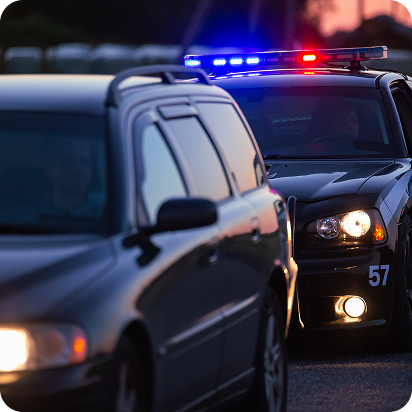
Justice For YouDWI DefenseA DWI charge in North Carolina carries serious consequences you shouldn't face alone. Cotten Law Firm handles the full range of impaired-driving cases and builds a defense focused on protecting your rights and your license, call for a free consultation.
-
Start Your DefenseCriminal DefenseFacing criminal charges in North Carolina? Cotten Law Firm provides aggressive, one-on-one defense at affordable rates, backed by attorney Jeremy Cotten's experience with tens of thousands of cases.